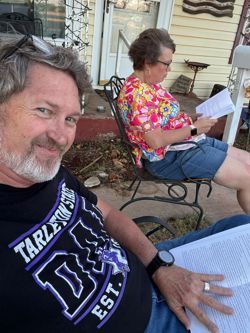
Hi, I'm Joel Owens. Ordinary guy. Decided one cool February evening to write a book.
I wanted it to contain my weird humor, my great memories from Junior High in Del Rio, and to be (gasp!) a first love story.
And no, I never imagined this electronics nerd to be a "romance novelist". That person was inside, hiding for a long time, wondering what people would think.
But I had the perfect setting! Del Rio, Texas!
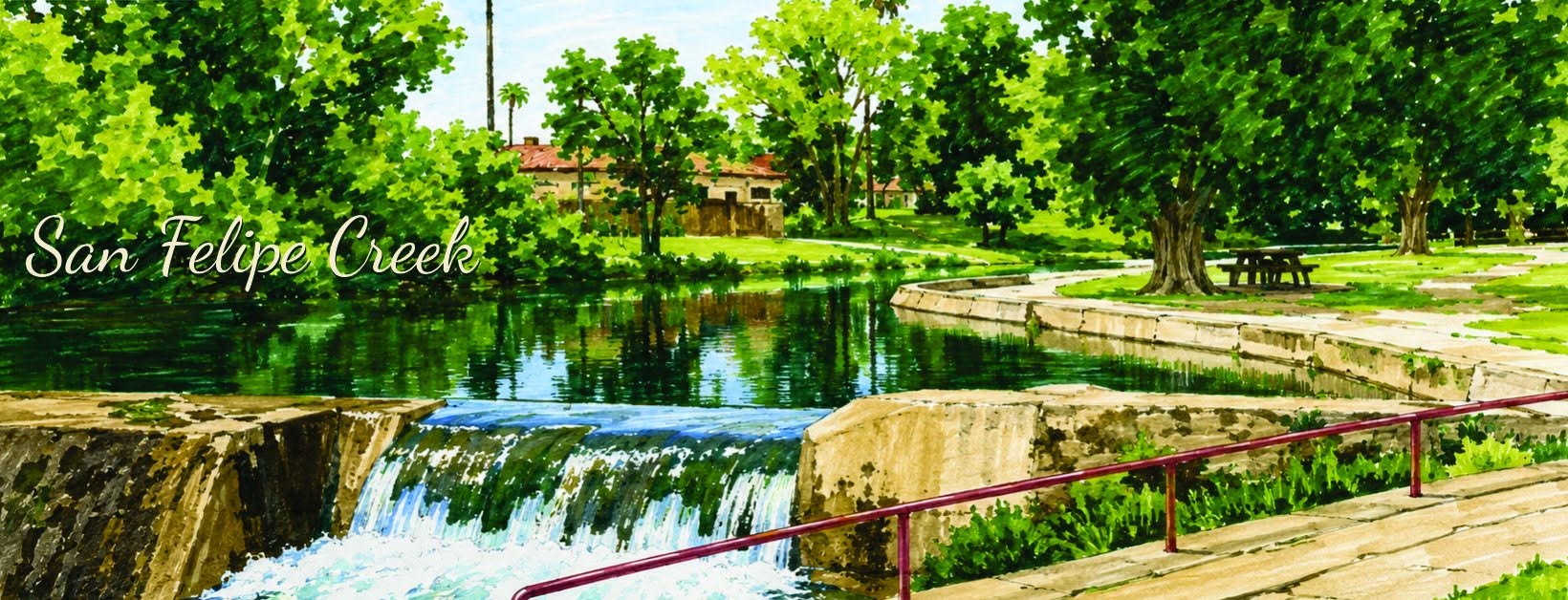
I think I lived in the most wonderful town during 5th, 6th, and 7th grades. So close to the upper branch of the San Felipe Creek, I could throw a rock from the house and splash! Fish for crawdads, skip rocks, bomb little boats and things with rocks.
I could sneak down farther by walking the narrow rock wall that overlooked the channel below. It would take me to Johnson Street and drop me right into Lions Park, probably the best swimming and wading I've ever experienced.
The most wonderful restaurants and food, the best music was everywhere from Classic Rock on KDLK to live Mexican music in a lot of places. I couldn't pass up using this as my setting for a first love story. It was perfect.
But a lot of good things come to an end, but not all good things ended there. I moved to a new town, made new friends, had a blast in high school.
The way I felt making the move was something I wanted the reader to feel. It didn't happen all at once. News trickled in and things happened slowly like a storm approaching inexorably on the horizon.
I was comfortable in Del Rio. I had friends, the wonderful place, the great food and music. I was headed into the unknown. That's a little tough when you're young.
Living in Texas all my life, I have seen this kind of change in so many ways. Even the weather can change in an afternoon! One October day in Brownwood, it changed from summer to winter as I watched a wall of blue coming from the north.
I was in a T-shirt and jeans, and by the time I got home from work, I was lighting the heater and digging out my sweatshirts.
In Merkel, we get sand storms that look like a brown wall coming in, usually from the west-northwest and suddenly you can't see the highway.
Anyway, the feeling of that change was was hard to articulate, until I gave it to the character of Michael. I hope when you read about him, you can remember some of those changes in your life, and hopefully in a good way.
So when I wrote this book, I knew the biggest earth-shattering explosion came right at this moment, and from this character, "Hi! I'm Patricia. Most people call me Trish." And Michael's world would never be the same again.
That was a feeling I, for certain, wanted to share. And it isn't new or unique—I think most people catch that at some point, some earlier than others.
At any rate, On with the show!
I think a lot of people remember the highlights of their younger years, and they remember them fondly.
Over time, we tend to wash out the bad and leave only the good. Maybe we just exaggerate the good, and that's where we come up with sayings like "The good ol' days."
Probably some wisdom could be learned from Carly Simon's "Anticipation," where she reminds us that these are the good old days. Often, we don't recognize them while we are living them.
It's around the age of Junior High that I, and others I have visited with, experienced what they felt in their hearts was their first love. And those are powerful emotions at an age where emotions carry a lot of weight. Of course, very few of those first loves ever actually pan out for either person. Time and distance come to carry us away. We may get to know the other person and realize they aren't quite the dream-like fit we imagined them to be, and we go separate ways. But the memories tied to those emotions are hard to shake.
For some, we use time to polish them into something happy that we can enjoy remembering.
Sometimes those memories can bring back a lot of hurt and even some damage to our sense of self-confidence. I imagine them sometimes in the way we imagine Charlie Brown with a small cloud hovering over him, raining just on us.
As a result, the interactions we have during those times, especially those of a close friendship and maybe more than that, can play a larger part of forming us than we like to acknowledge.
As for me, some of the less happy of those memories left me feeling discarded and replaced by 'the better guy'. I went the path of comparing myself in a negative way to other people around me, and I was doing it with a measuring stick that cut unfairly. I don't think I was the only person who did this, but I felt very much alone in that world. It took time to straighten my self-valuation. Later, I slowly learned that most of us are average people. That's how the word came about. The measure of a person's worth isn't from the wealth or beauty, but it's what's in the heart. I believe there is goodness and grace and kindness in a lot of people. But you wouldn't know it from their appearance.
In my book, I wanted to show ordinary people, living in ordinary houses, eating ordinary food, sharing ordinary lives, driving ordinary cars. I wanted to show that some people struggle much harder than others, but from those things come people who are kind and loving, care deeply, who think of the needs of others as more important than their own (Philippians 2:1-4). Those people are amazing, and they bring with them the life-energy that spreads to others who are around them.
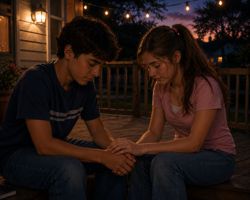
San Felipe Creek has a lot of prayer in it. A lot. I also wanted my book to remind myself—and you, my friend—that many times we don't get what we pray for. Or we certainly don't get what we pray at the rate we wish for it to happen. People who are sick often pass away. People who struggle with addictions continue to struggle with them their entire lives. Some people are destroyed by the decisions they make. Others are crippled in many ways by those decisions. In fact, some prayers feel like they are answered with a stern 'No'. We might feel like God either didn't hear us, He didn't see our need the way we thought He should, or even worse—we consider that God may have ignored us. Because of that, we might think He doesn't care that we struggle to keep our heads above the waters of sadness and grief. As Michael would say in this book "But it's still important to pray." We know that often we pray for someone who is sick, and then death, unforeseen, enters instead of the healing and recovery we hoped would come.
I believe from scripture that God hears our prayers. It's kind of an odd thing we do—stopping to talk to someone we can't see, sometimes with our hands folded, on our knees, or with our eyes closed. But it is our faith in Him that causes us to still go to Him in prayer, even though we have to know in that same faith that we might not see the answer we want. Or we may not see that answer for years.
I have a very distinct memory of praying with a family whose father and husband had just been loaded onto an ambulance in front of their house. I saw the ambulance and because I knew them, I stopped. He was conscious, talking, and I remember praying as though I somehow knew he was going to be just fine. A couple of days later, I was asked to officiate his funeral. I did my best to put together a message of hope and love, but believe me - I stood at that pulpit with the sensation that the rug of my prayer life had been pulled from under me. Understanding was a long distance beyond my horizon.
In my book, I referred to an old hymn called "Farther Along" (W. B. Stevens / J. R. Baxter Jr., 1937) which states that things may happen and we may lose loved ones, our houses will feel empty and lonely, and we won't be able to understand why in this lifetime. But in the scope of eternity, not only will understanding come, but joy will come with it. I keep the small flyer from his funeral inside my Bible as a reminder that God has His timing, and that I should never get too comfortable with the notion that the gift of another day is just around the corner. It might not be there. (2 Peter 3:10-12)
God may not give us an answer, or he may give us an answer that is opposite of what we expect. But it's still important to pray. That's our connection to an almighty and powerful God.
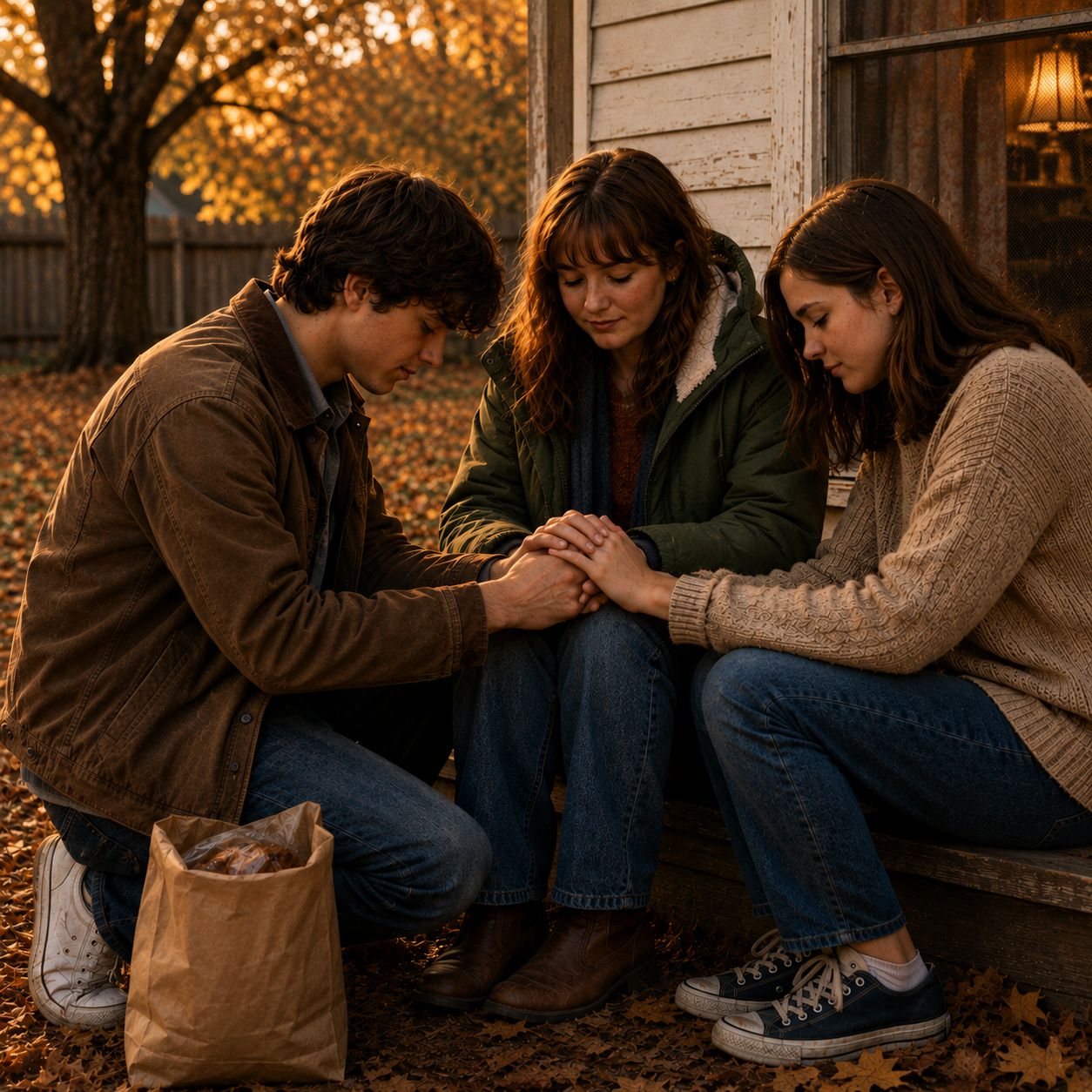
There is a common misinterpretation of scripture that I hope this book helps dispel: God won't give you more than you can handle.
On the surface, that sounds nice, and we think "God expects me to rise up and face this."
I Corinthians 10:13 does NOT say that. And you won't find that teaching anywhere in your Bible. In fact, there are times when the seas of life knock us completely to the ground.
That scripture says, in essence (my wording) "All of mankind faces the same temptations. You aren't different, but you aren't alone. But whatever temptation you are facing, God will provide you a way to say 'NO' to it." And that's what the scripture actually says.
In San Felipe Creek Michael does face more than he can possibly handle. And he lives with that every day. But the premise of the book is that those things change us, and they can change us for the better. God may not ever remove the pain, and time may not always soften it.
But what we do with our pain makes us into the people we become over time, in either good or bad ways. But we get to decide that. And that's what San Felipe Creek is about.
People touch our lives in different ways. They say one thing that encourages us, or they give us a sheet of paper with a hand-drawn schematic that fascinates us at a young age, or they give us train-whistle codes, or that one piece of sage advice that we somehow manage never to forget. I wanted to honor that. To lift it high as an example of what we should be to those who are young and looking for direction. I wanted to honor the feeling of love at a young age and to remember how powerfully it forms us and makes us dream of what we wish for in life. It teaches us how to treat others with respect and dignity, and to see the very best in those we are privileged to live close to.
San Felipe Creek was quite literally one alleyway from behind the house where I lived in Del Rio during my Junior High years. I spent many hours there, swimming and wading in the heat of summer days, walking along in my coat on cold November day, skimming rocks along the surface, building and bombing wooden boats, other times sitting on the rock wall high over the channel below me, dreaming and thinking, planning and hoping for wonderful things in life. It was a magical place to me, and a magical time to be there. I had many good friends from school and band, several of whom I keep in touch with even today. My model USS Enterprise hung from the ceiling in my room, spinning slowly with the breeze that came through the windows. Many of those things did not survive the move from there, and losing them only added to my sensation of being in a strange world where I knew nobody, where there was no creek or any nearby water. The adjustment caused me to come out of my shell and to give real effort to my life, to make those new friends, to find places I could enjoy, and to even spark those feelings once again that I never thought I would find. Well, believe me, I found them. And I lost a few times, as we all do. But in time, things followed God's path and fell into place the way He planned for them to.
The ending of San Felipe Creek wasn't always the ending you read today.
In an earlier version, I thought about how most first loves don't end together. Michael and Trish never found each other again. Michael eventually married, raised a family, and returned to San Felipe Creek years later, where memories of Trish came flooding back.
To add to the solemn feel of that ending, Michael and Ginger's parents had both passed away by the time we got to visiting the place marked by the little lamb. There were others there, Ginger was elsewhere and Michael visited them alone.
My wife, Teresa, had a single sentence in regard to a ceremony where two important people were missing from their front row: It was sad. In fact, everything happening to Michael was sad toward the end, and even at that stage of writing the book, I felt sad, and I couldn't explain why.
When I read that version, I realized something important: I had written an ending that felt plausible, but it wasn't my story. It was never my purpose to take my memories of living in Del Rio and turn them into a huge downer for my readers. That just didn't seem right to me.
I didn't want Michael's memories of Trish—a picture, a few pieces of paper, and a short echo of her voice on a tape—to be all he had left. I wanted the story to find its way back to the creek—and to them.
So I went back and changed it. The result is what you have in your hands.
Steve Martin wrote this line into his screenplay L.A. Story, "Forget for this moment the smog and the cars and the restaurant and the skating and remember only this. A kiss may not be the truth, but it is what we wish were true."
So, my book may have a fairy-tale ending. But I think it is a reminder of what we can all feel today, if we will just look with appreciation and love at the people God has placed in our lives and the many gifts and blessings He has given us.
These are the good old days. Live in them. And give love.
Joel